M-Audio BX8 D2 Studio Monitor Kenya — 8-Inch 130W Powered Reference Speaker
M-Audio BX8 D2 Studio Monitor Kenya — 8-Inch 130W Powered Reference Speaker
Couldn't load pickup availability
 Need help before checkout?
Chat with Zamar on WhatsApp
Get product advice or a quote before you order.
Need help before checkout?
Chat with Zamar on WhatsApp
Get product advice or a quote before you order.
The M-Audio BX8 D2 studio monitor Kenya producers and engineers trust is built for one thing: telling you the truth about your mix. No flattery, no coloration, no guessing. Just accurate, full-range playback that lets you make real decisions and walk away confident.
At the core of the BX8 D2 is a 130W bi-amplified power system, split into 90W for the low end and 40W for the highs. That separation keeps each driver operating in its optimal range, which means cleaner output at higher volumes and zero crossover distortion muddying your low-mids. The 8-inch woven Kevlar cone woofer handles bass reproduction with the kind of tightness that lets you hear the difference between a 60Hz kick and an 80Hz one. The 1-inch natural silk dome tweeter sits above it, delivering smooth, extended high-frequency detail without the harshness you get from cheaper materials.
Frequency response runs from 35Hz all the way to 22kHz. That is full-spectrum monitoring. You are hearing sub-bass information, the full midrange, and the air above 16kHz, all from a single compact cabinet that fits on a standard studio desk.
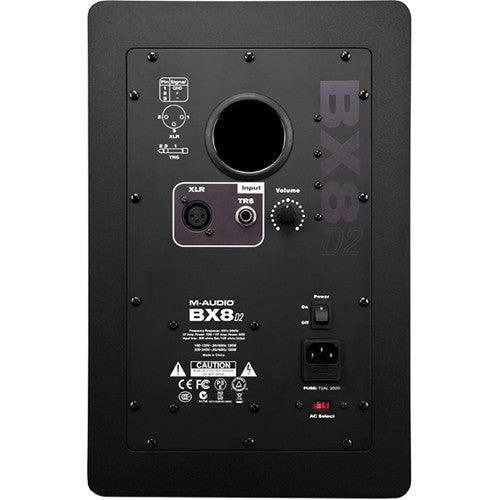
Placement flexibility is built in. The Acoustic Space control on the rear panel is a boundary EQ switch that compensates for the bass buildup that happens when a monitor sits close to a wall or in a corner. Most studios in Nairobi are working in treated rooms or home setups where placement is not always ideal. This switch handles that reality without requiring you to move furniture.
Connectivity is professional-grade. Balanced XLR and TRS inputs on the rear panel mean you can run directly from an audio interface, a mixer, or a patchbay without introducing noise from unbalanced signal paths. The front-panel volume knob keeps level adjustments fast and within reach.
The M-Audio BX8 D2 studio monitor Kenya buyers get from Zamar comes with a local Kenyan warranty and ships fast across Nairobi and nationwide. Whether you are tracking vocals in a home studio, mixing beats for release, or mastering a full project, this monitor gives you the reference-grade accuracy to get it right the first time.